

Driving Across the Baltic Sea with Two Kids
With our six-year-old and one-year-old daughters, we drove onto a ferry in Helsinki and continued through Estonia to Latvia. We covered about 1,000 kilometres in seven days and ran into no major problems. The two people we happened to meet along the way are what I still remember most clearly.
The summer holiday in Finland was almost over. At the beginning of the year, we had thought about flying to Copenhagen, but our younger daughter was still little. After talking it over, we decided to drive instead. We would take the ferry across the Baltic Sea, then drive from Estonia to Latvia. At first, we had planned nine days and thought about adding Lithuania as well, but with such a young child, we shortened the trip to seven.
We did not settle the exact route with GPT until the day before we left. We tried to keep each day's drive to two or three hours: Pärnu for the first night, then Riga, a day trip from Riga to Jūrmala, followed by Cēsis and Tartu, and finally the ferry from Tallinn back to Helsinki. Since we were driving, we expected the plan to change along the way and intended to book hotels only one or two days ahead. In the end, almost nothing changed. We followed the route pretty much exactly as planned.
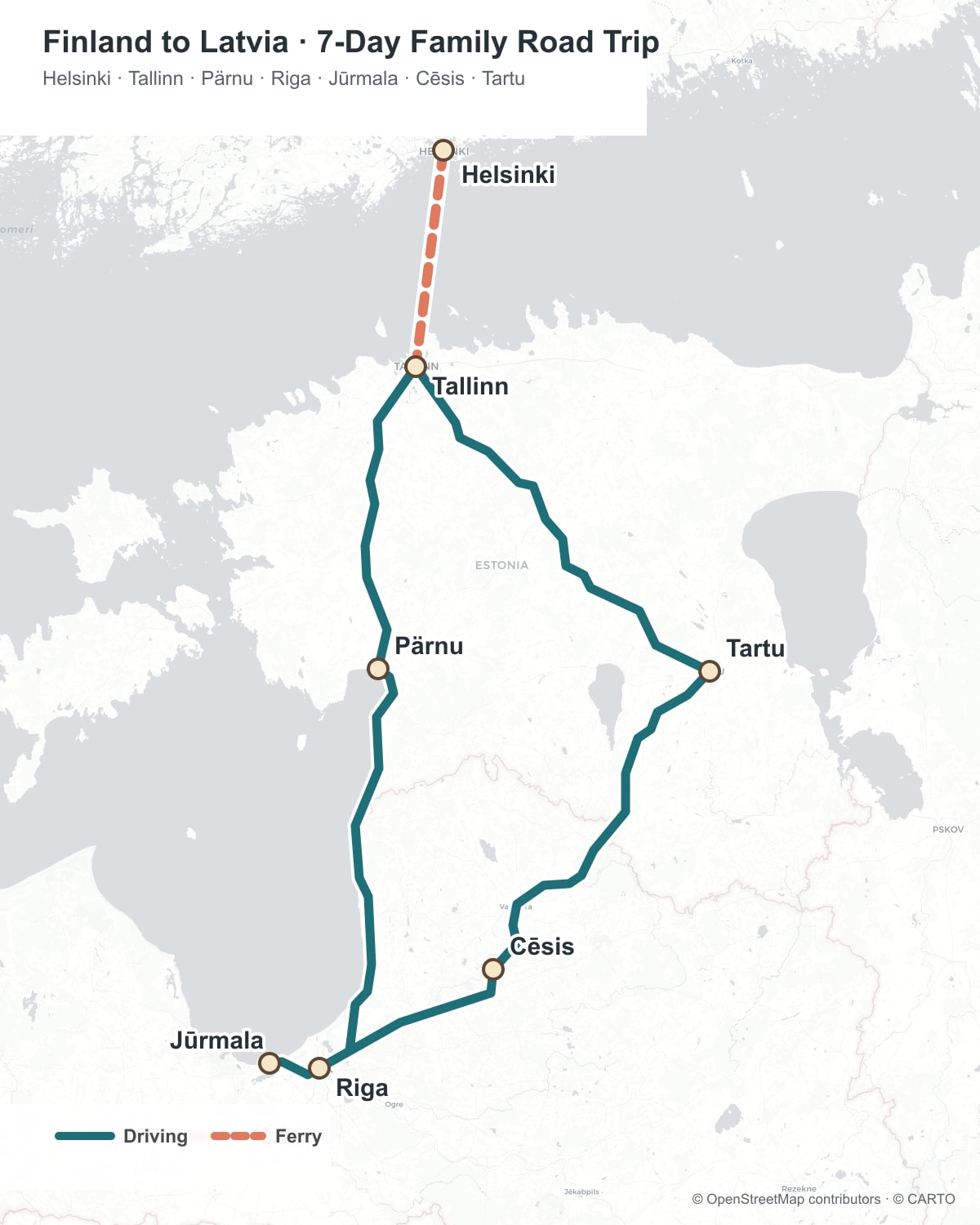
Our route for the trip.
The ferry from Helsinki to Tallinn takes a little over two hours. Once the car was parked on the vehicle deck, we headed straight to the children's area so the kids could burn off some energy. There happened to be three huge beanbags inside. I took one, our older daughter took one, and the baby took one. We had barely boarded before all three of us switched straight into lying-flat mode.
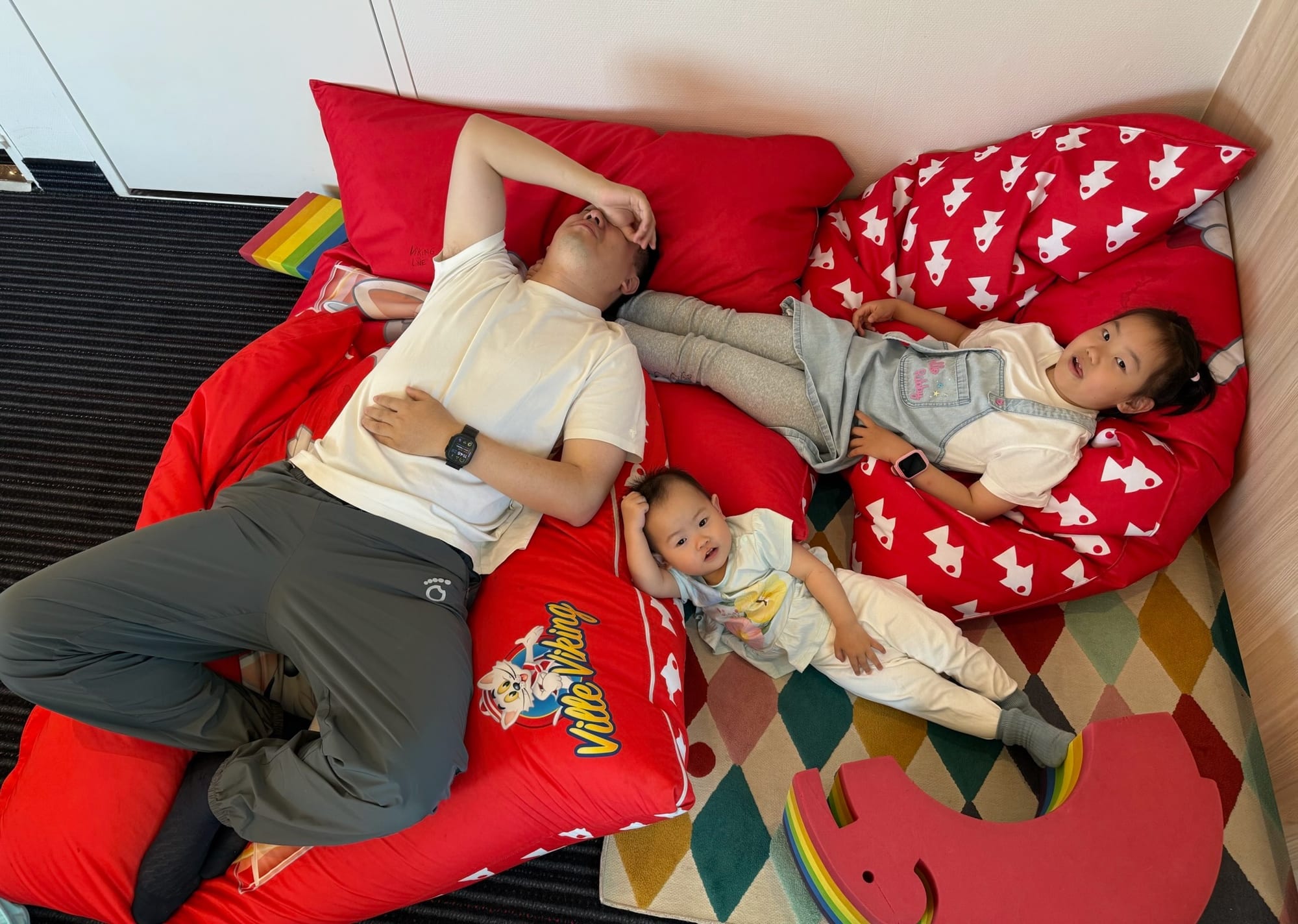
Three beanbags in the children's area, one for each of us.
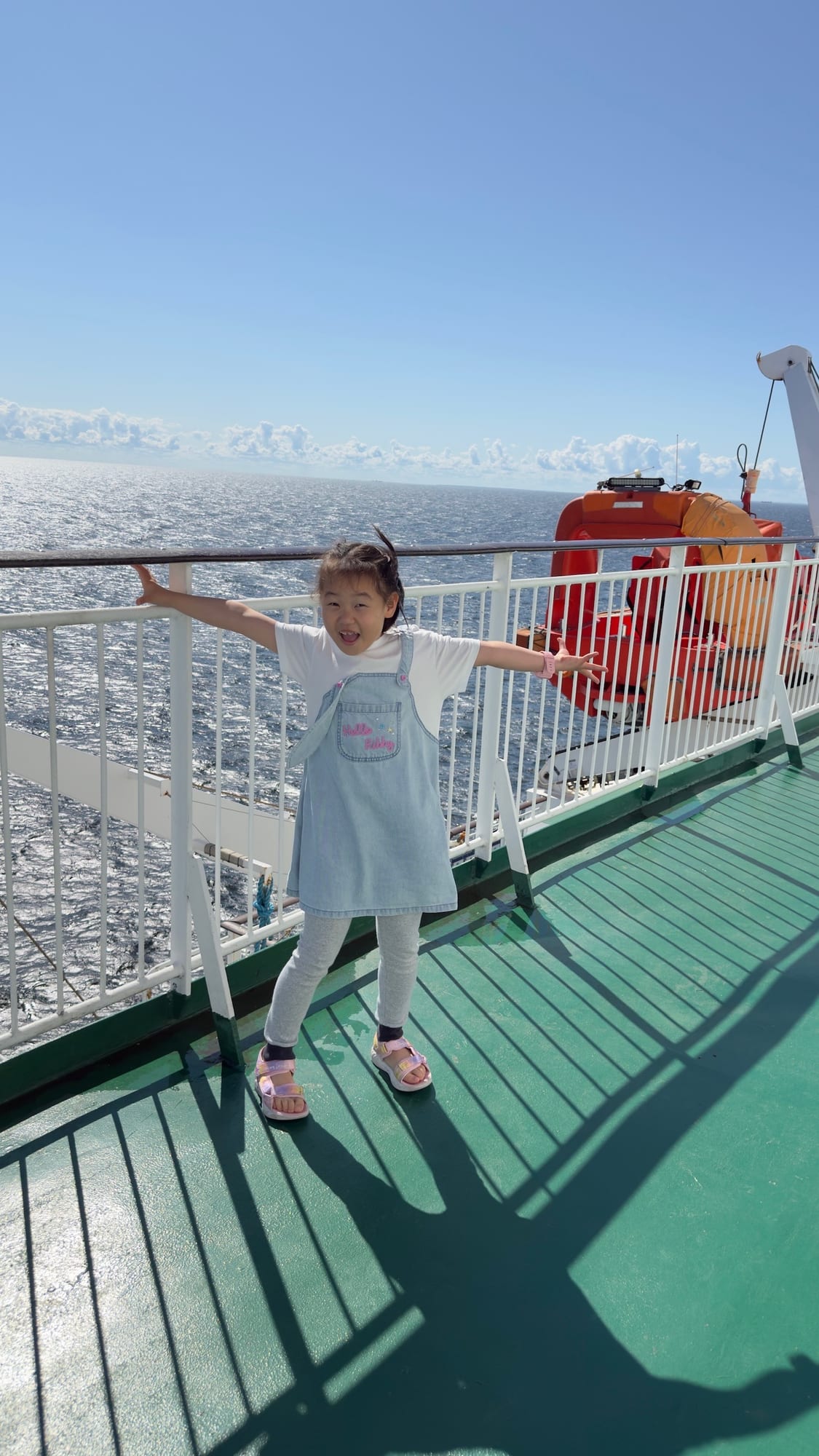
Our older daughter on the ferry deck.
After driving off the ferry in Tallinn, we spent the next few days heading south. I had never driven across countries like this before, and I had assumed that borders and charging would be a little troublesome. Once we were on the road, neither felt like much of an issue. When we crossed from Estonia into Latvia, we did not even see a border line. We simply kept driving, and the next time I looked at the navigation, we were already in another country.
Charging was also easier than expected. We drove around 900–1,000 kilometres in total, and there was a Tesla Supercharger close to nearly every place where we stopped. Each charge took about twenty minutes to reach 80 percent. With a one-year-old in the car, we could not have driven for hours without stopping anyway. One adult would go to the toilet, the kids would get out and move around for a while, and by then the car was usually ready to go. Charging did not really delay us at all.
Pärnu
We stayed in Pärnu on the first night because driving all the way from the port to Riga would have been too far. We had also heard that Pärnu was beautiful.
Pärnu is a very relaxed city, with a beach and quiet streets. The next morning, we were in no hurry to leave. We spent a long time lying in the garden of our guesthouse and enjoying the sun before continuing towards Latvia.
I really loved that feeling. The guesthouse was a two-storey wooden house. Hydrangeas were blooming in the garden, and a few sun loungers sat on the grass. The children played while the adults lay around lazily in the sun. It was about 25°C, which was just right. It felt pretty much perfect.
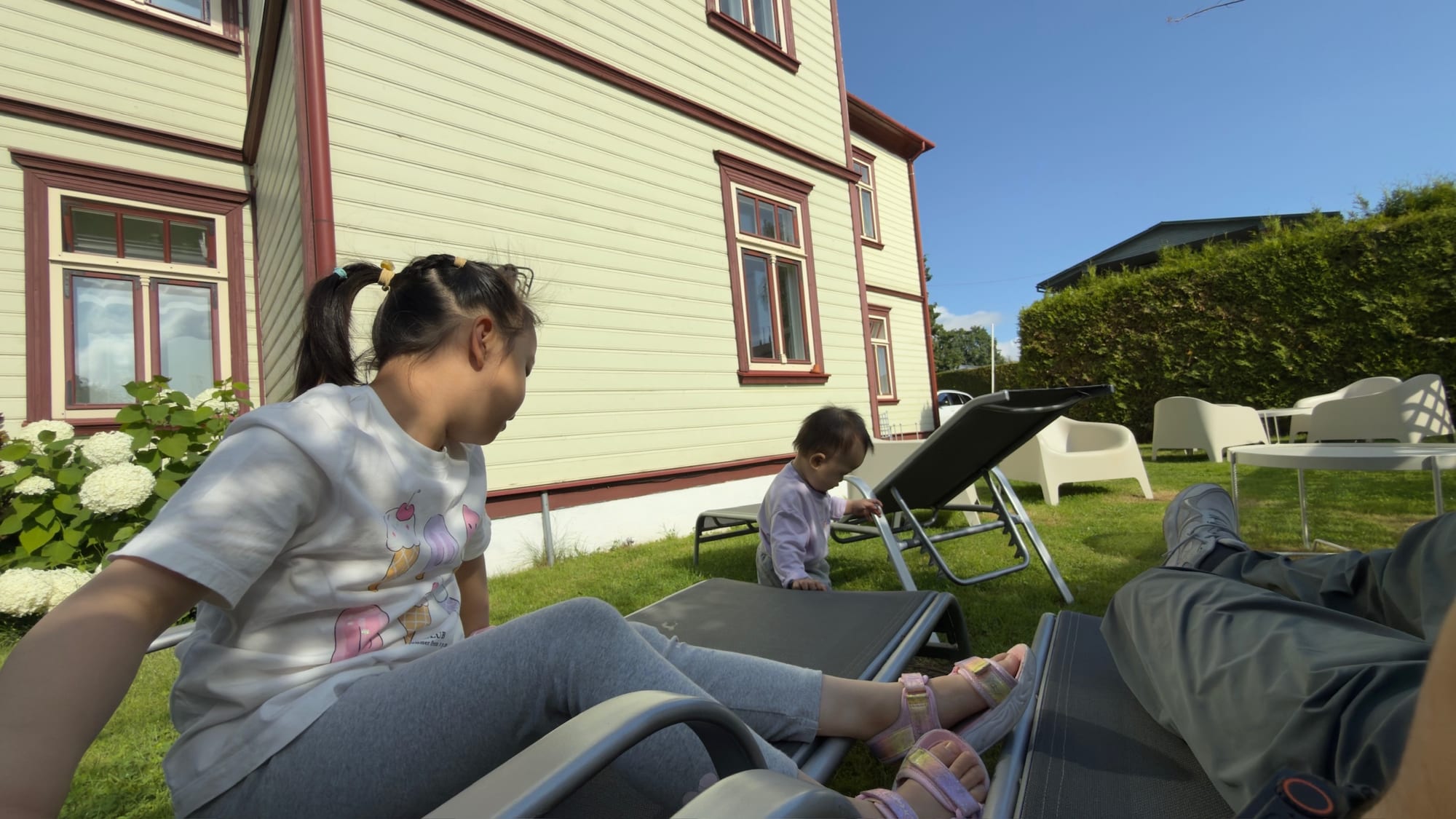
The garden at our guesthouse in Pärnu.
Riga and Jūrmala
From Pärnu, we drove to Riga and checked in. On our second day there, we went to the well-known seaside town of Jūrmala. It is most famous for its beach, but we somehow got lost in one of its forest parks first. Dzintari Forest Park has a 33.5-metre observation tower. It was only after climbing to the top that I realised I had apparently started to be afraid of heights.
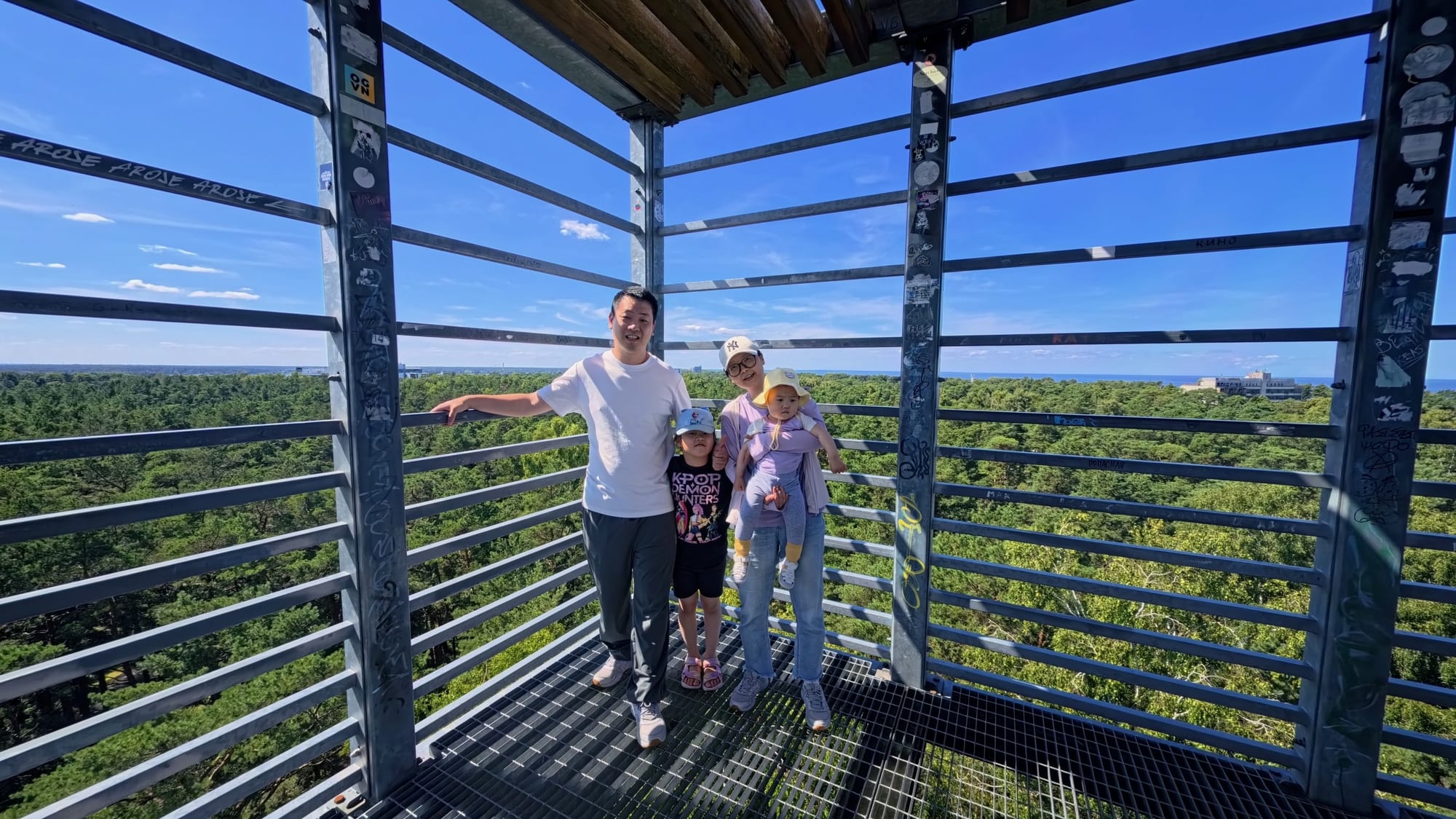
Our family at the top of the observation tower in Dzintari Forest Park.
After coming down from the tower, we split into two groups. I took our older daughter to the high-ropes course, while my wife took the baby to the children's area. One was six and the other was one, so naturally they wanted to do different things. There was no reason for all four of us to stay together all the time. We each did our own thing and met up again later, which made the day much easier.
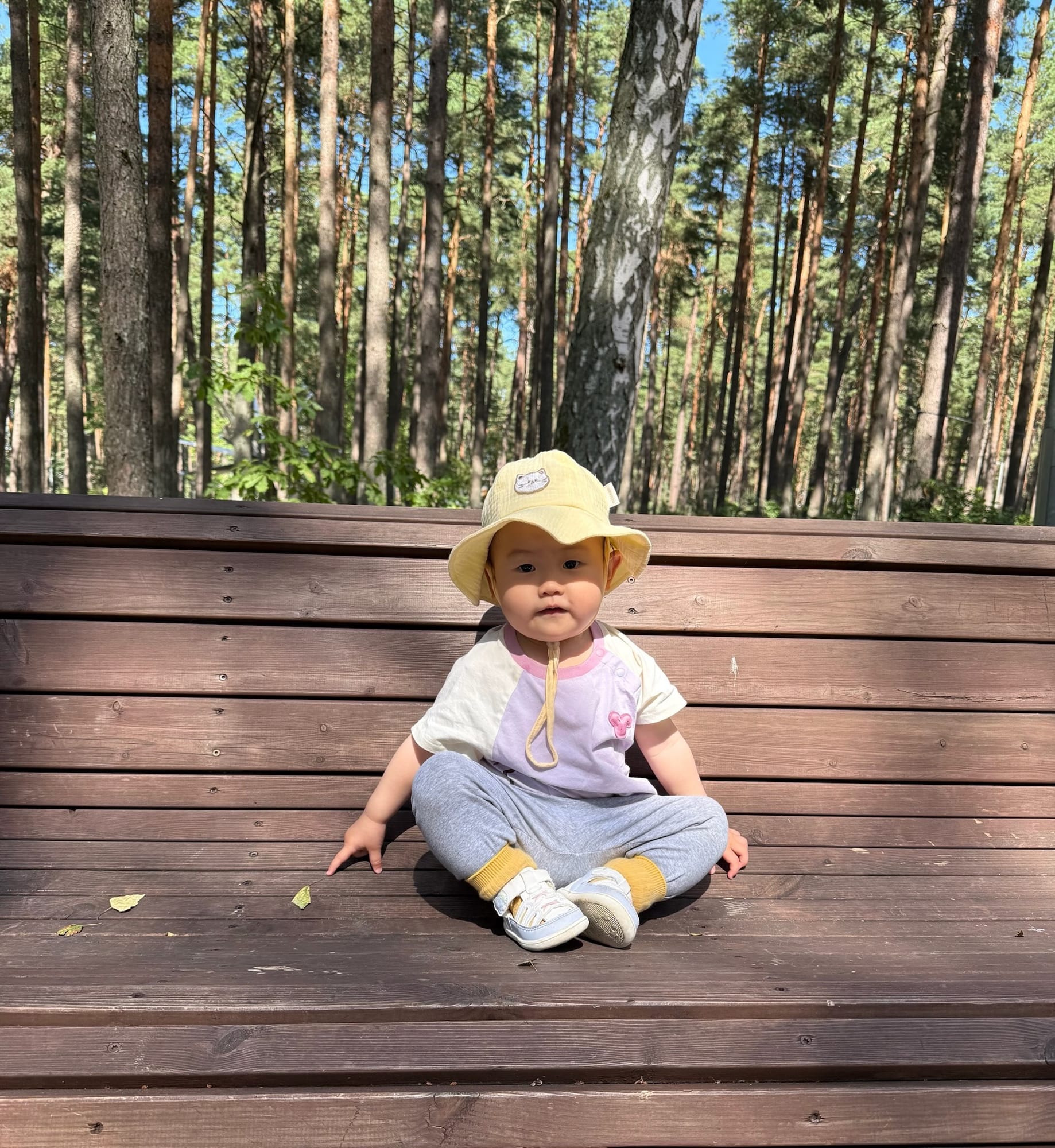
Our younger daughter in the forest park.
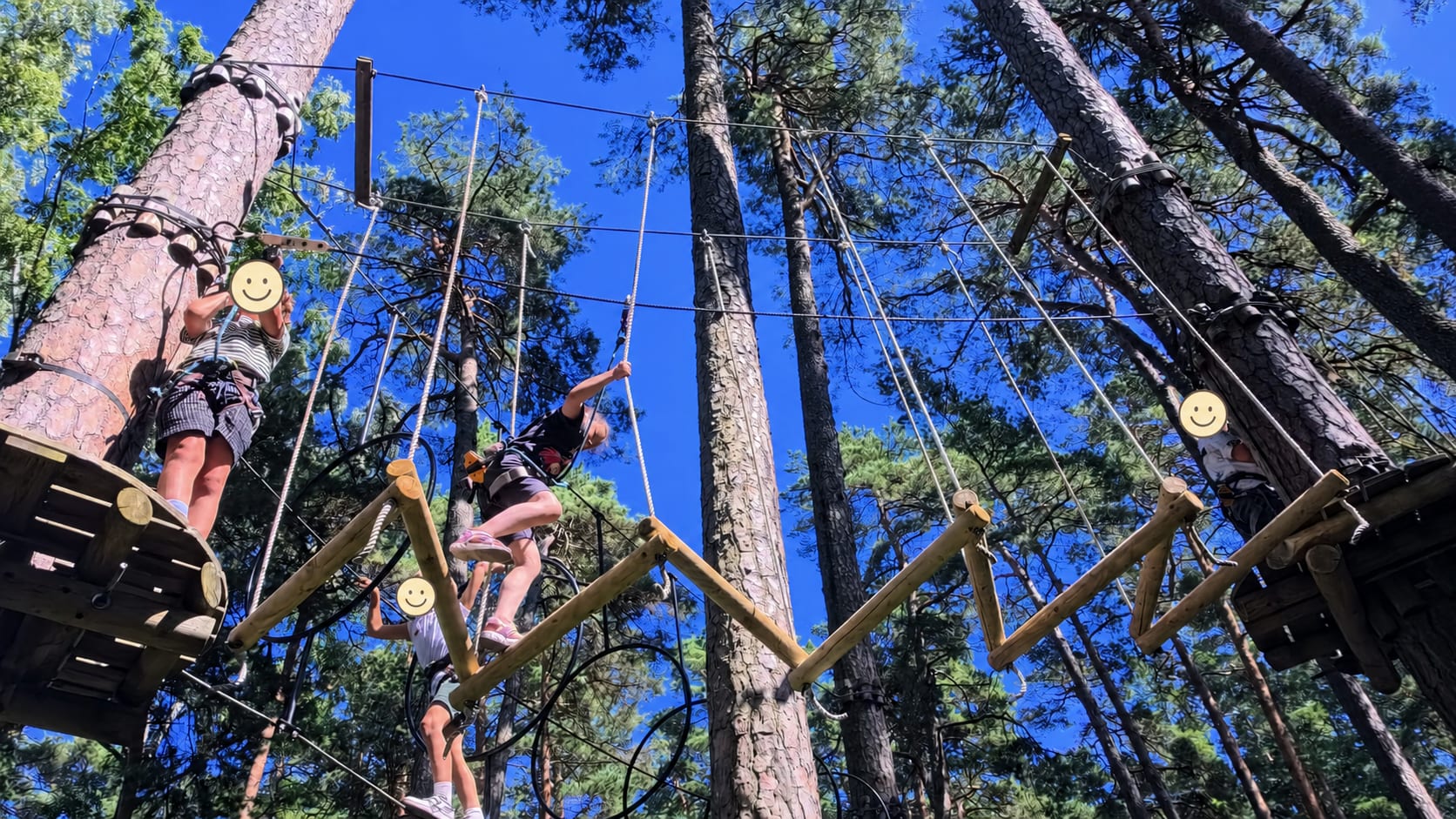
Our older daughter on the high-ropes course.
That evening, we all went to Jūrmala Beach. Our older daughter walked into the water, while I held the baby and helped her take a few steps along the shore. It was her first time playing with sand and her first time stepping into the sea. Whether she will remember any of it later, I have no idea. Later, the sky turned pink and orange. We had spent the daytime in the forest and the evening at the beach. It was a full day, but it never felt rushed.
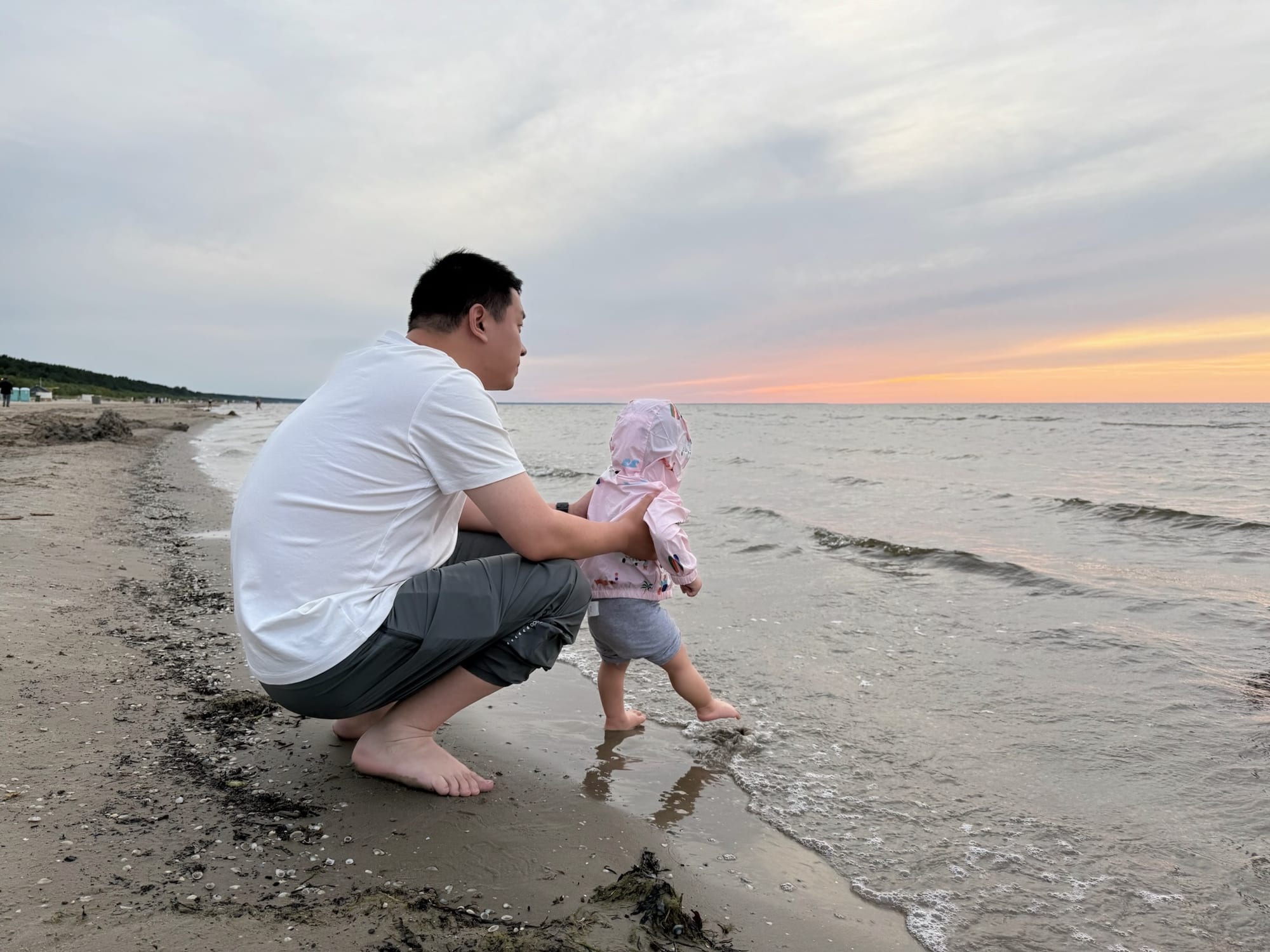
Taking our younger daughter into the sea for the first time.
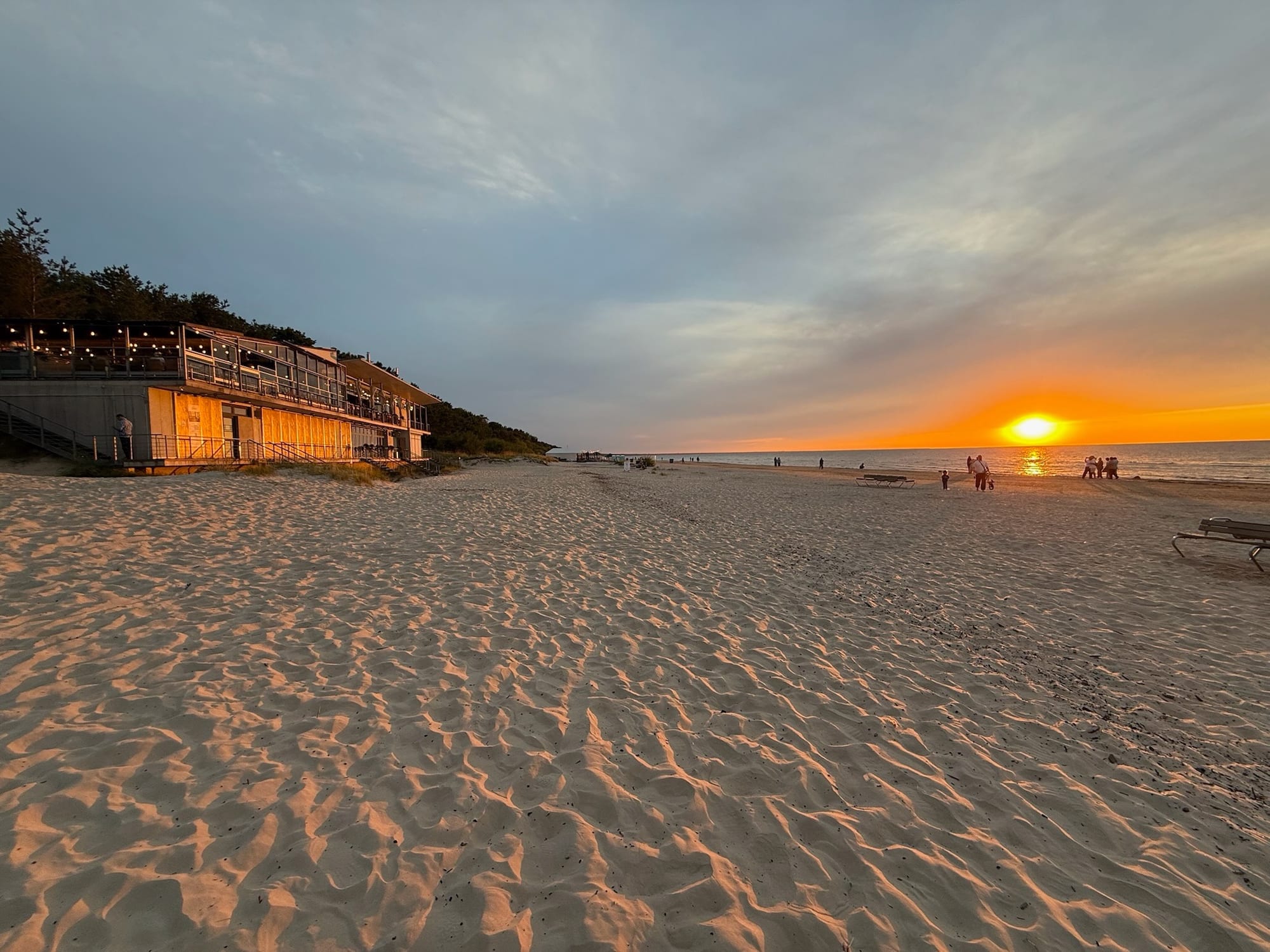
Sunset on Jūrmala Beach.
We also met one of the most interesting people from the trip on that beach. At first, several children were simply playing near the swings. His daughter started playing with our older daughter, and he came over to say hello. The two girls were around the same age, and the two fathers were also around the same age. Somehow, we just kept talking.
I later learned that he had visited Shanghai and had lived in Hong Kong, Singapore, and Australia. He had moved to Latvia only a few years earlier. My first thought was simply: this man has lived in a lot of places. He told me that he loved photography. In winter, when the sea in Latvia freezes, he takes his camera and walks out onto the ice until everything around him turns white, as if he has entered another world. I was honestly envious when he described it. His life was completely outside my experience. It had never even occurred to me that someone might wait for the sea to freeze just so he could walk out and take photographs.
Later in the conversation, he said that many people envied him for travelling to so many countries and living in so many places. But he envied people who could stay in one place and have friends they had known since childhood. That answer surprised me. I was still busy envying his life and had never really thought that he might envy something we considered completely ordinary.
The children eventually went off to do something else, and the conversation ended there. After we came home, I even tried to find him on social media. Unfortunately, I knew too little about him and never managed to find him.
The next day, we stayed in Riga and mainly walked around the old town and the canal. Our older daughter wore a rainbow dress that day and stood out everywhere. When we looked through the photos later, quite a few of them featured that dress.
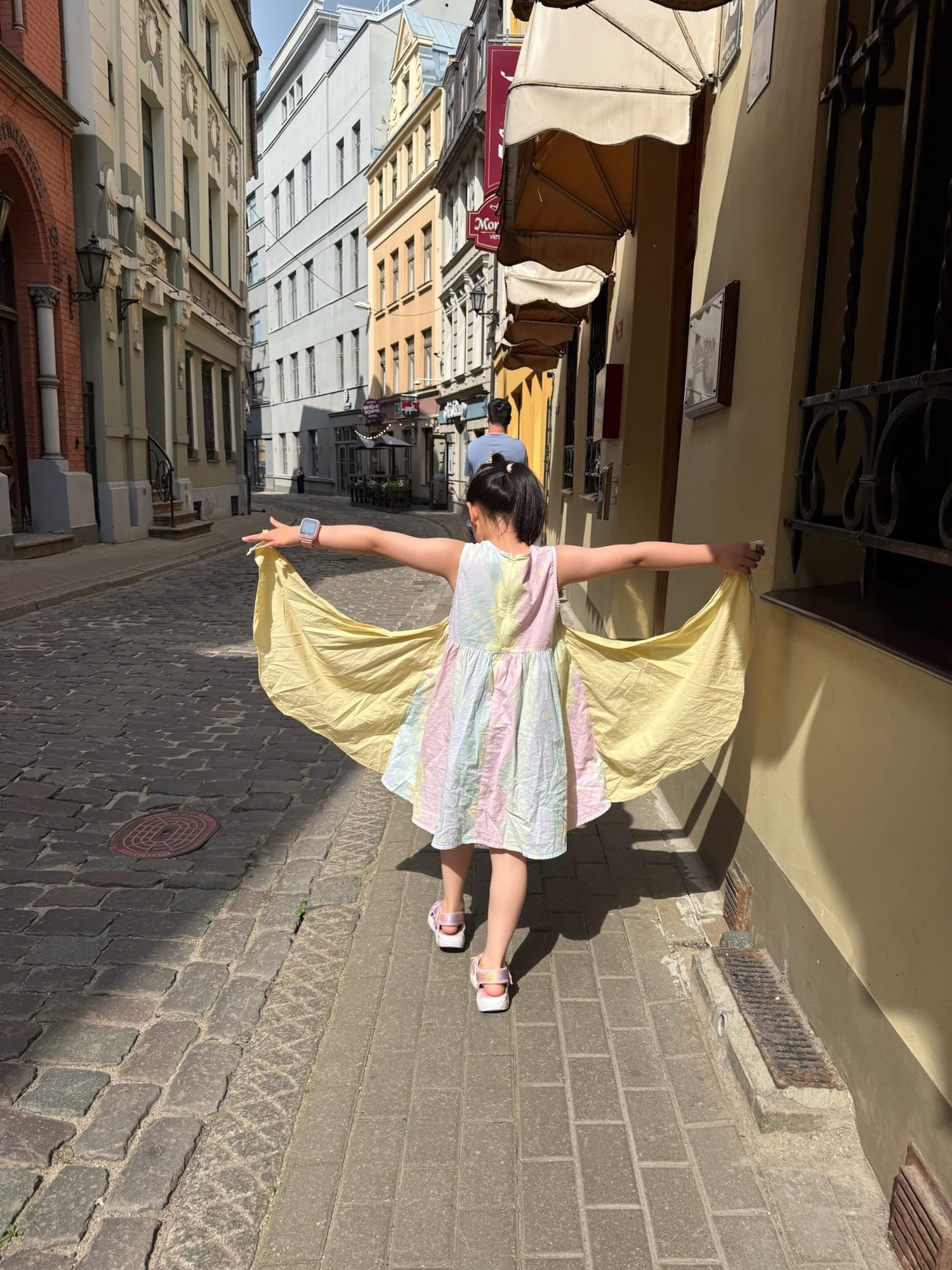
Our older daughter in her rainbow dress in a lane in Riga Old Town.
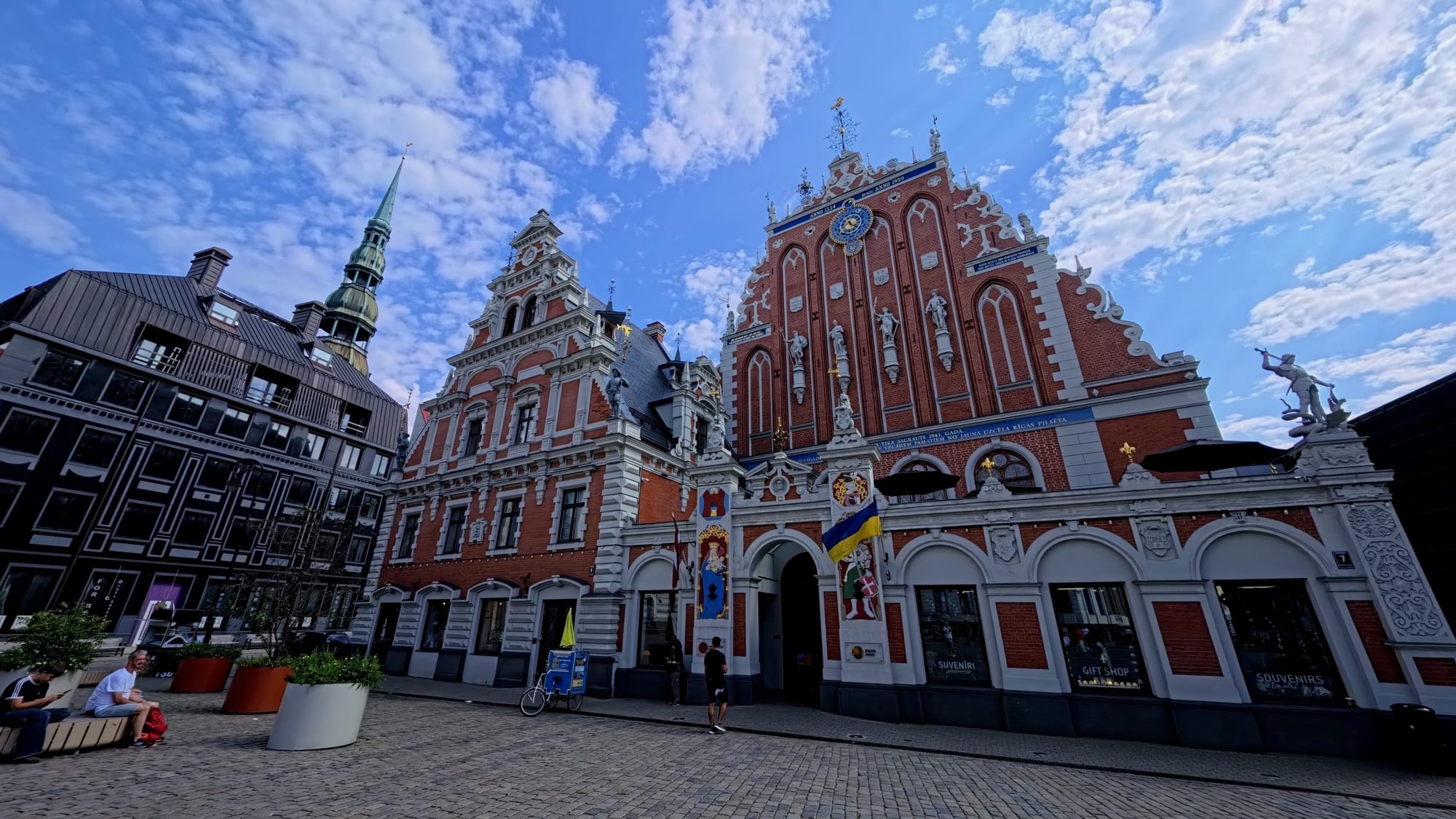
The House of the Black Heads in Riga Old Town.
Cēsis
After leaving Riga, we went to Cēsis Castle. One of its more unusual features is a tower with no lighting at all. Visitors have to carry a candle lantern inside. The walls are stone, the stairway is narrow, and the lantern is the only thing lighting the way. I tried putting it aside for a moment, and it really was pitch-black. We had visited castles before, but this was the first one where we had to carry our own light into a dark tower. It was a simple detail, but the experience felt quite different.
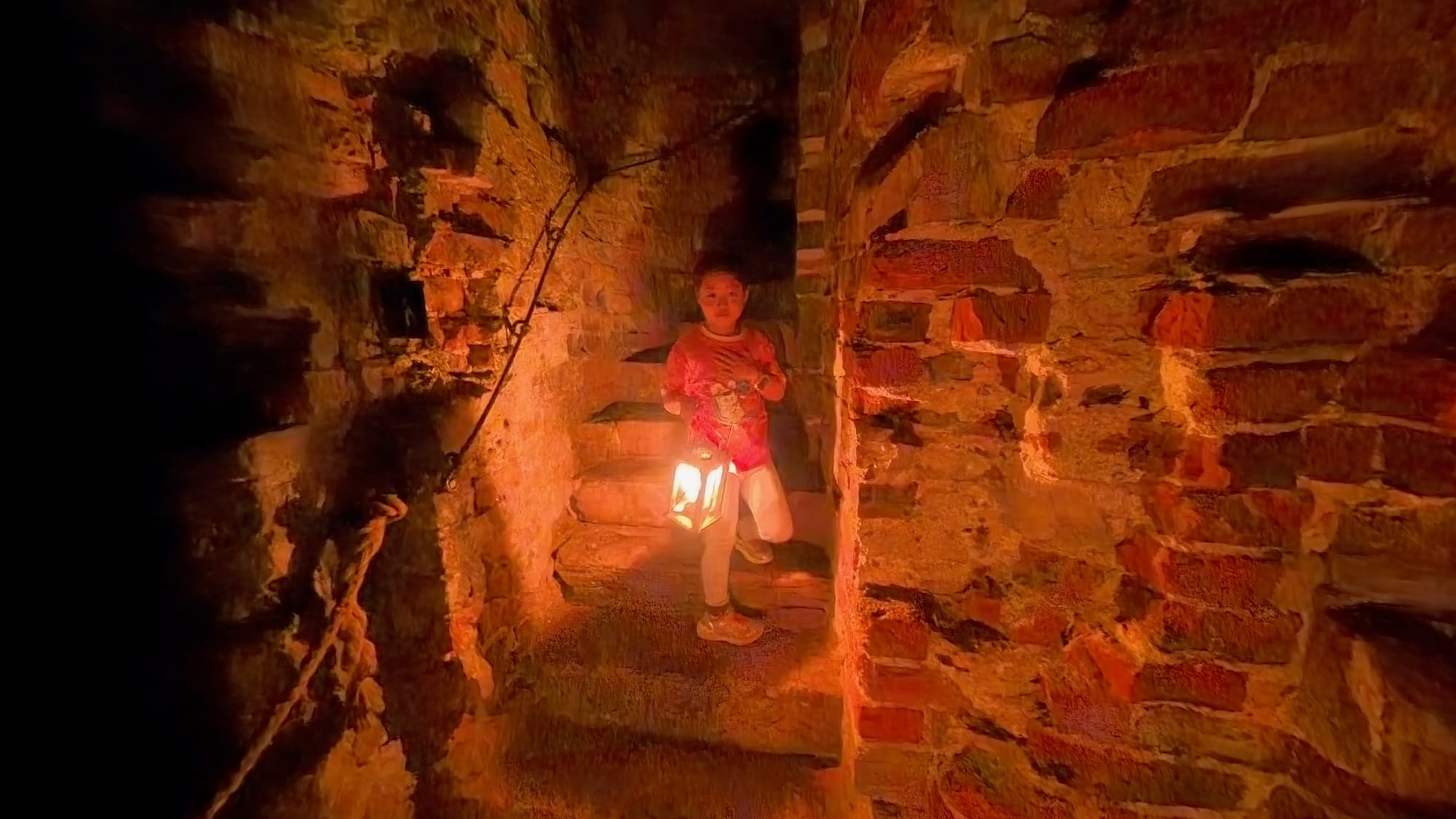
Our older daughter carrying a lantern into the tower.
That night, we stayed at a manor near Cēsis. The room next to ours happened to be occupied by another Latvian family travelling with a child. When my older daughter and I came back from the forest, we saw them playing in the open courtyard and said hello. A little later, their daughter came over rather shyly and asked if she could play with ours. Once the two girls started playing, I began talking with her mother.
We started with holidays and children, and somehow the conversation moved to which languages children study at school. She told me that although their family had lived there for many years, they had originally wanted their daughter to choose Russian, their mother tongue. Her daughter's school no longer offered it, so they chose English instead. She felt this was connected to the current geopolitical situation. I did not ask whether this applied only to her daughter's school or reflected a wider change, so I can only record what she told me.
Their family felt quite similar to ours. The father ran his own business while also working for a multinational company, which was one reason English mattered to them. They were also thinking about whether their daughter should prioritise the local language or English. We lived in different countries, but after becoming parents, we were worrying about many of the same things. We all hoped our children could grow up with some exposure to different cultures.
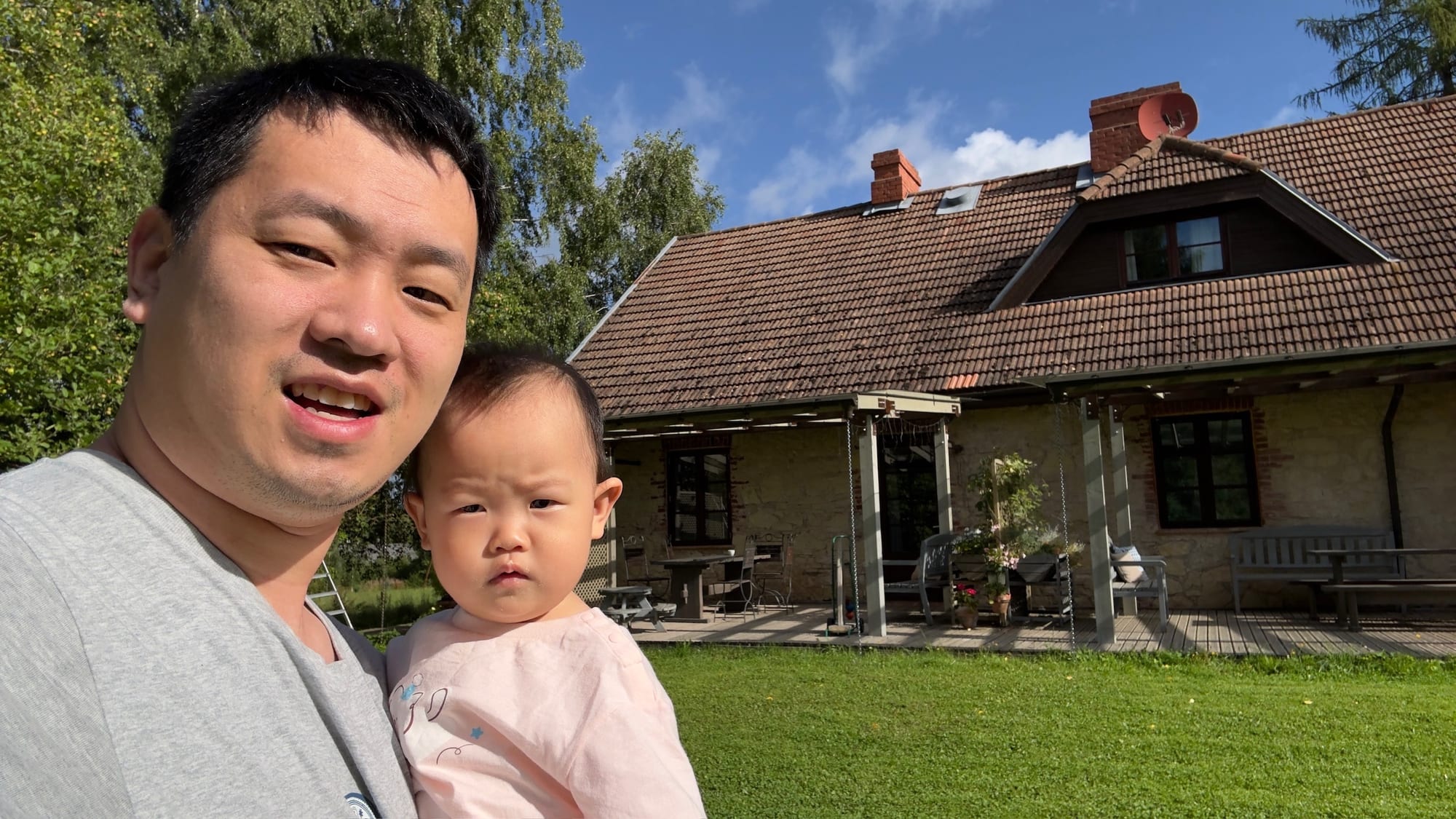
The manor where we stayed. The other family is not in the photo.
The next day, we went to the AHHAA Science Centre in Tartu. It was not huge, but it packed in a surprising amount of information, and the exhibits were very well made. It was much more interesting than I had expected.
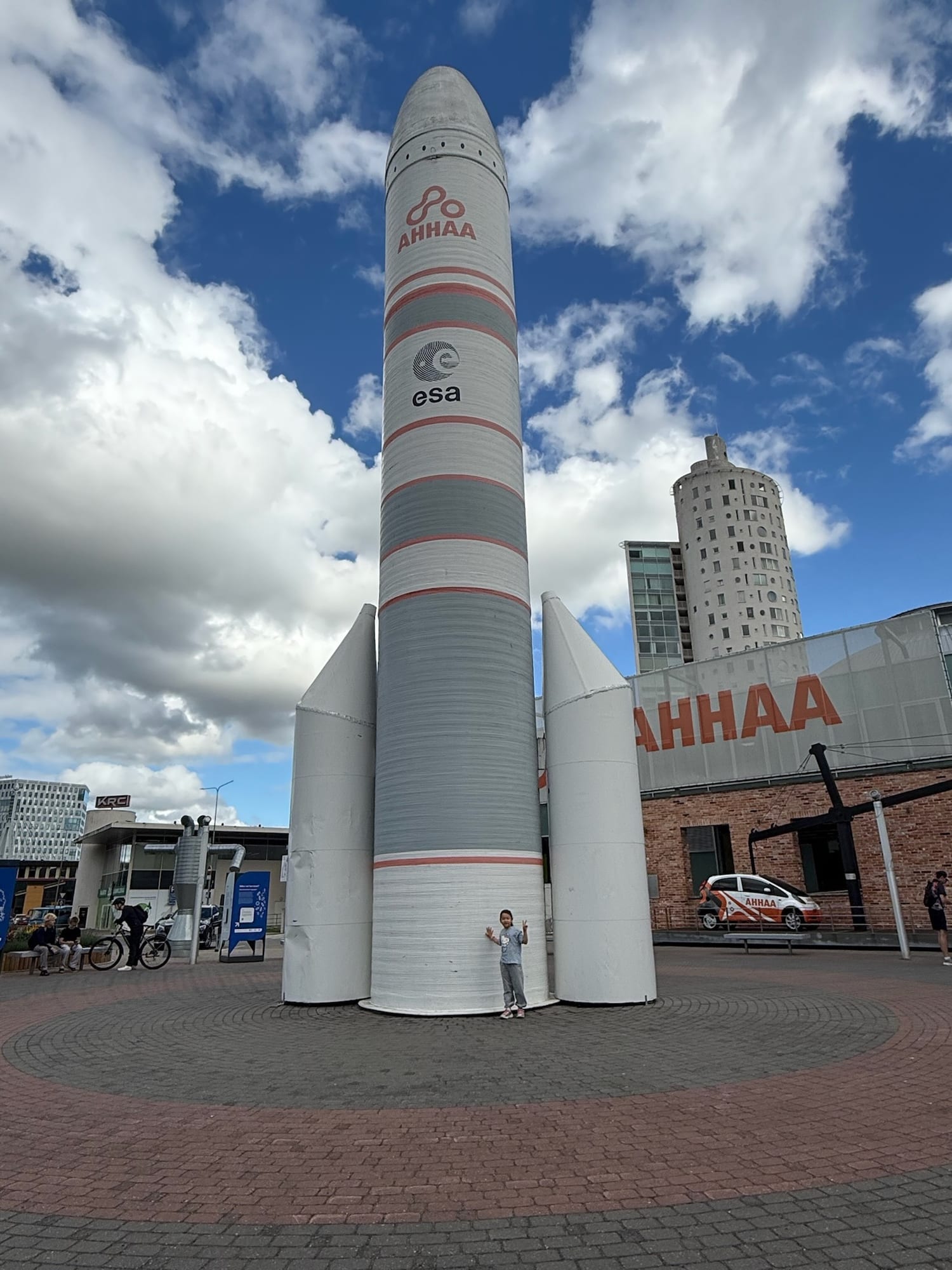
AHHAA Science Centre in Tartu.
The Journey Home
On the seventh day, we drove the same car onto the return ferry and started making our way back to Finland.
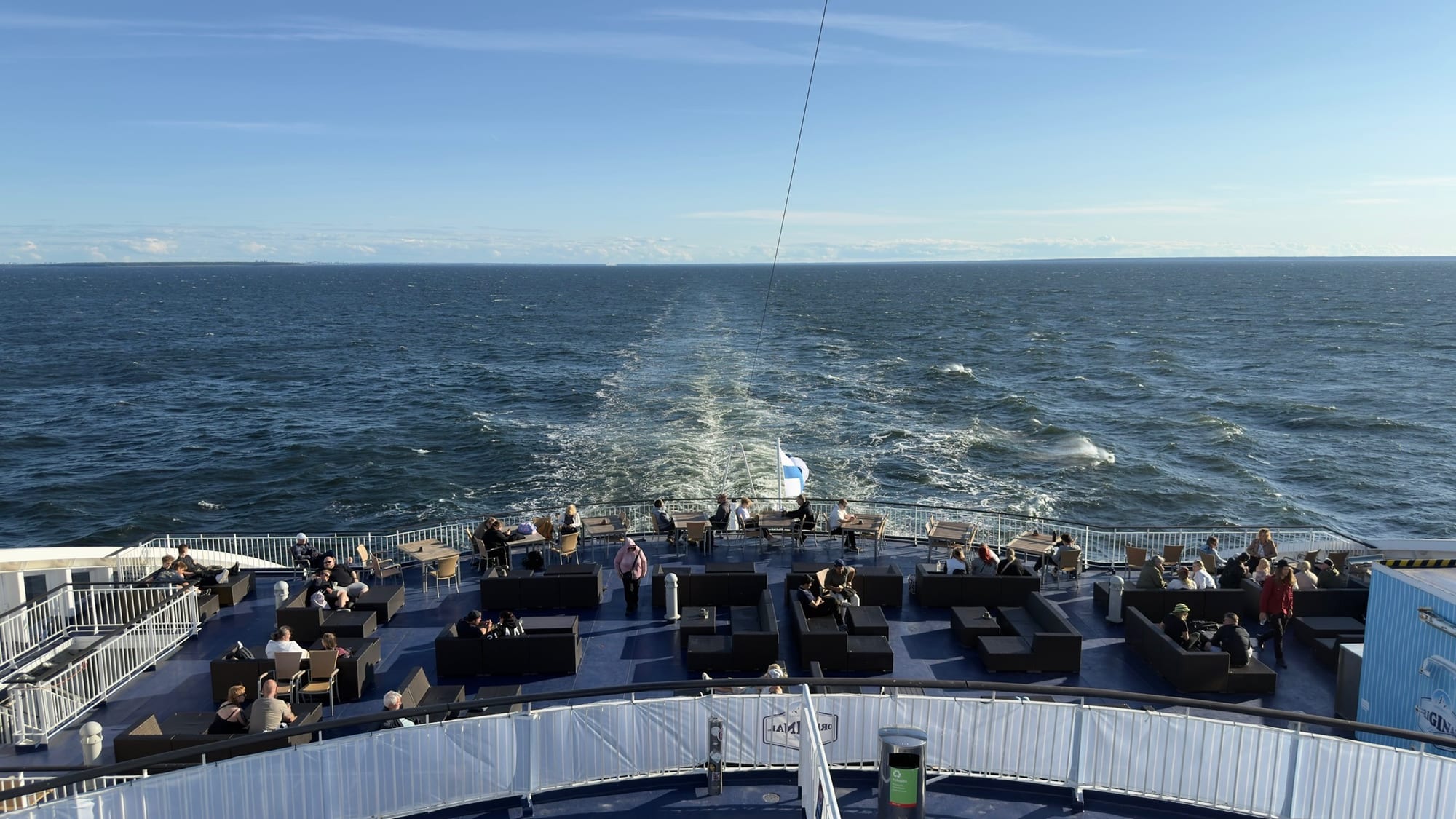
The wake behind the ferry on our way home.
On the ferry, our younger daughter went straight back to playing in the ball pit. The evening sun came through the window as she held a yellow ball. She probably had no idea that we were already on our way back to Finland. As far as she was concerned, there was a ball pit, and that was enough.
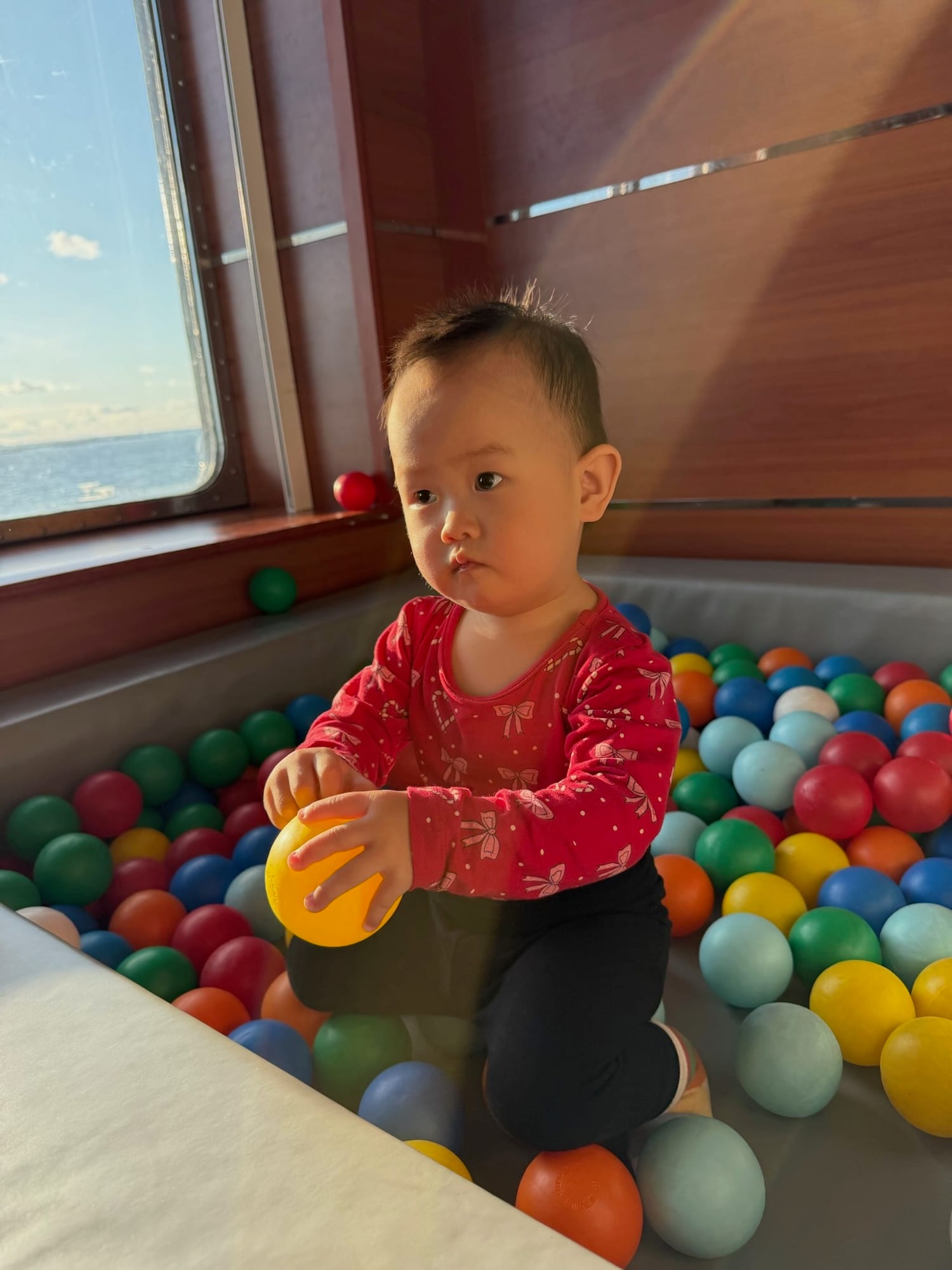
Our younger daughter in the ball pit on the return ferry.
We drove around 900–1,000 kilometres during the trip: by ferry from Finland to Estonia, by car into Latvia, and then all the way back around. Crossing the sea, driving between countries, and charging the car had all worried us beforehand, but none of them caused much trouble. The route barely changed either. If we take the children on another road trip this long, we will probably still try to keep each day's driving to two or three hours.
When I looked through the photos after coming home, I found that the people I remembered most clearly were the two who did not appear in any of them. One was the father on the beach who loved photography. His life was completely beyond anything I had imagined, yet he envied us for having friends we had known since childhood. The other was the mother at the manor who talked with us about which languages our children should learn. We lived in different countries, but many of the things we worried about were much the same.
We had only settled the route with GPT the day before leaving, and in the end it hardly changed. Thinking about it later, a route can tell you where you are going. It cannot tell you what you will remember when you come home.
Keep Reading
Writing about Finland, life, and code. The next post goes straight to your inbox, without the noise.